Designing Experimental Research in Archaeology: Examining Technology through Production and Use
Designing Experimental Research in Archaeology: Examining Technology through Production and Use
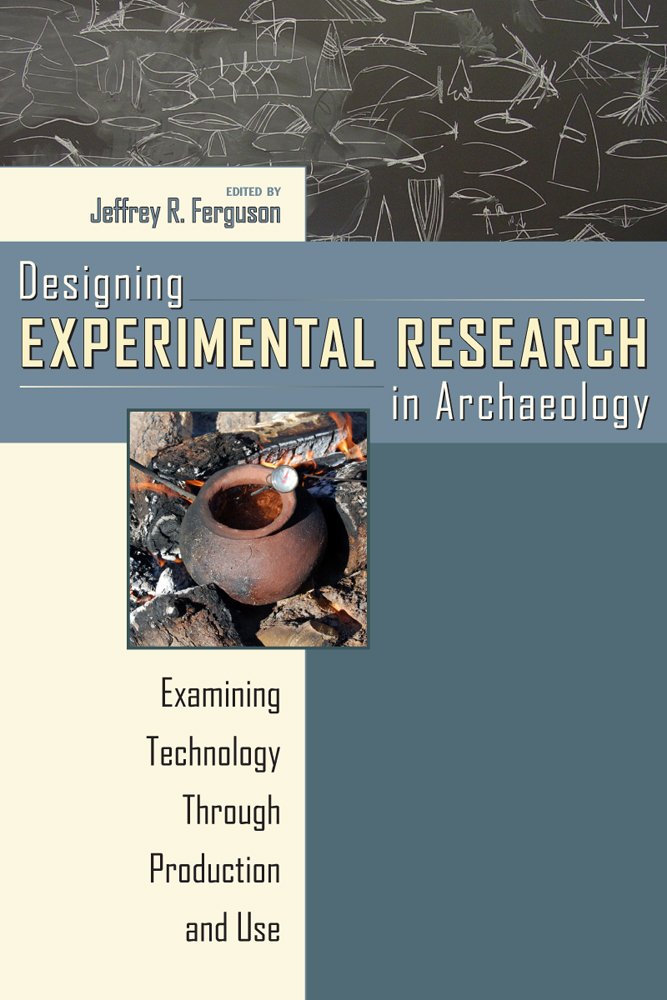
Designing Experimental Research in Archaeology: Examining Technology through Production and Use
OTHER ARTICLES

Designing Experimental Research in Archaeology is a guide for the design of archaeological experiments for both students and scholars. Experimental archaeology provides a unique opportunity to corroborate conclusions with multiple trials of repeatable experiments and can provide data otherwise unavailable to archaeologists without damaging sites, remains, or artifacts.Each chapter addresses a particular classification of material culture-ceramics, stone tools, perishable materials, composite hunting technology, butchering practices and bone tools, and experimental zooarchaeology-detailing issues that must be considered in the development of experimental archaeology projects and discussing potential pitfalls. The experiments follow coherent and consistent research designs and procedures and are placed in a theoretical context, and contributors outline methods that will serve as a guide in future experiments. This degree of standardization is uncommon in traditional archaeological research but is essential to experimental archaeology.The field has long been in need of a guide that focuses on methodology and design. This book fills that need not only for undergraduate and graduate students but for any archaeologist looking to begin an experimental research project.


Comments
Post a Comment