The Bridge to Humanity: How Affect Hunger Trumps the Selfish Gene
The Bridge to Humanity: How Affect Hunger Trumps the Selfish Gene
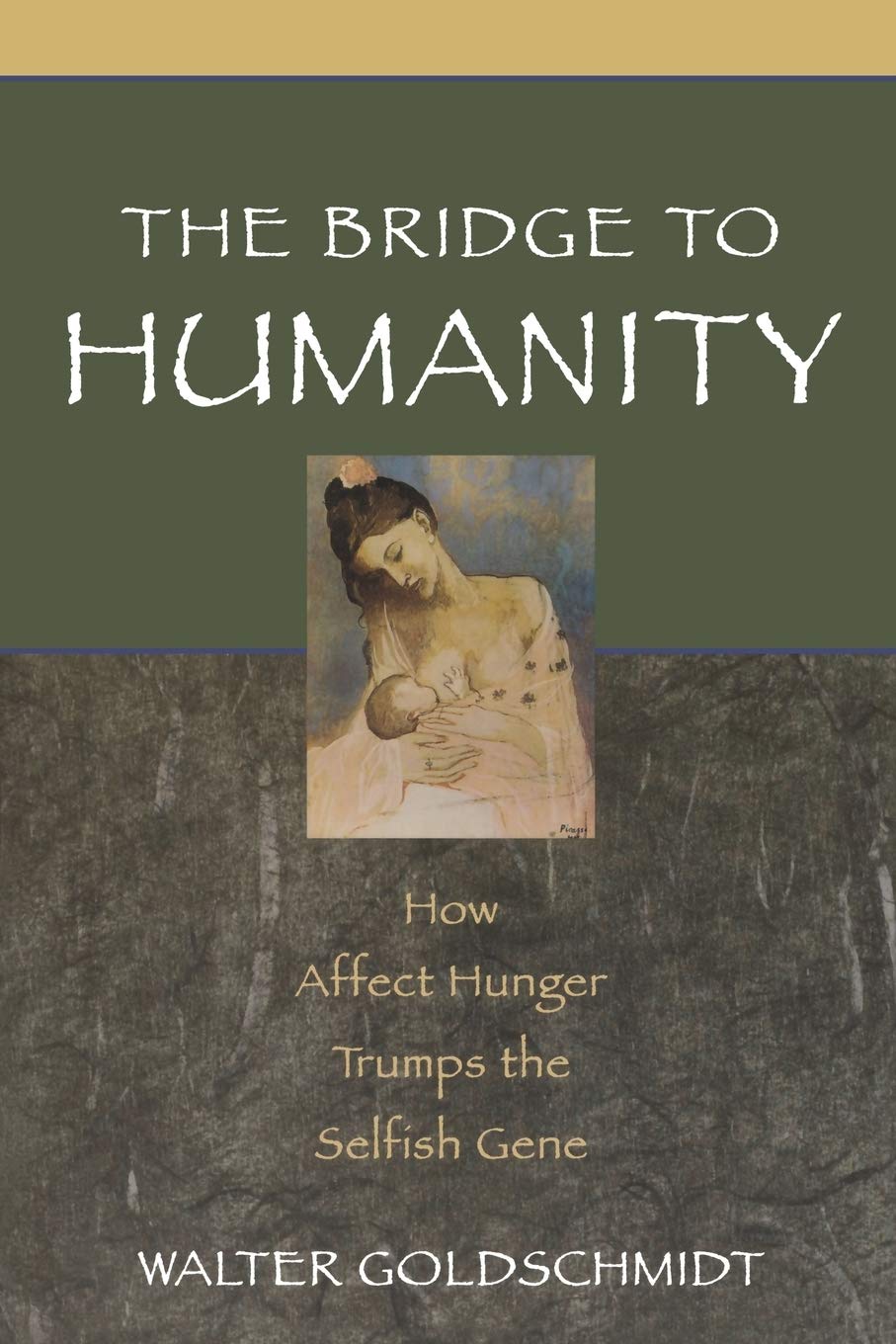
The Bridge to Humanity: How Affect Hunger Trumps the Selfish Gene
OTHER ARTICLES

The Bridge to Humanity: How Affect Hunger Trumps the Selfish Gene explores the relationship of biology and culture in the evolution of human behavior. Building upon several of the theoretical issues he first addressed in Man's Way, renowned anthropologist Walter Goldschmidt presents a uniquelook at how human culture functions through biological mechanisms that have evolved from our distant past. Affect hunger--the need for affective expressions from others--underlies nurturance and mutuality. Goldschmidt contends that affect hunger--in combination with other factors unique to the human species--in effect trumps the selfish gene and is therefore the essential missing key tounderstanding human behavior. Employing discussions of primate behavior, ethnographies, cognitive studies, psychological research, and hormonal and neurological studies, he demonstrates how affect hunger not only provides a reward system for learning language and other cultural information, but alsoremains a motive for social behavior throughout life. Transforming the debate on nature versus culture to one on nature and culture, The Bridge to Humanity provides a fresh perspective on the ways that biology and culture fit together. Indeed, in this book Goldschmidt reinterprets anthropologicalknowledge, profoundly affecting all students concerned with human behavior and reaching far beyond the discipline's borders.


Comments
Post a Comment